The economy was designed,
it can be redesigned

We are a collaboration of changemakers working to transform the economic system so it delivers wellbeing for people and planet.

Who we are
We are part of a global alliance working to transform the economic system.
WEAll Aotearoa is one of 25 hubs around the world that form part of the international Wellbeing Economy Alliance (WEAll).
Through building a new economic system we can address the root causes of major challenges such as poverty, inequality, climate change, and biodiversity loss.

Why the economy?
The economy underpins nearly every aspect of our lives, environment and society. Simply put, it is the way we produce and provide for each other. Right now our economic system is not delivering wellbeing for people or planet.
But, “the economy” is not a fixed or unchangeable system. Its rules and structures can be redesigned.

What is a wellbeing economy?
A Wellbeing Economy is an economy designed to serve people and the planet, not the other way around. Rather than treating economic growth as an end in and of itself and pursuing it at all costs, a Wellbeing Economy puts our human and planetary needs at the centre of its activities, ensuring that these needs are all equally met, by default.
We can lay new tracks and build a better future for current and future generations, and te taio.
Leave it in the 1980s
Our current economic system (neoliberalism) is not here by default. It is the result of deliberate policy choices made 40 years ago.
Like many things in the ‘80s, we think some of these policies are in need of a refresh.
Let’s leave where it belongs: in the 1980s.
What we do
-

We host events, conferences and international speakers
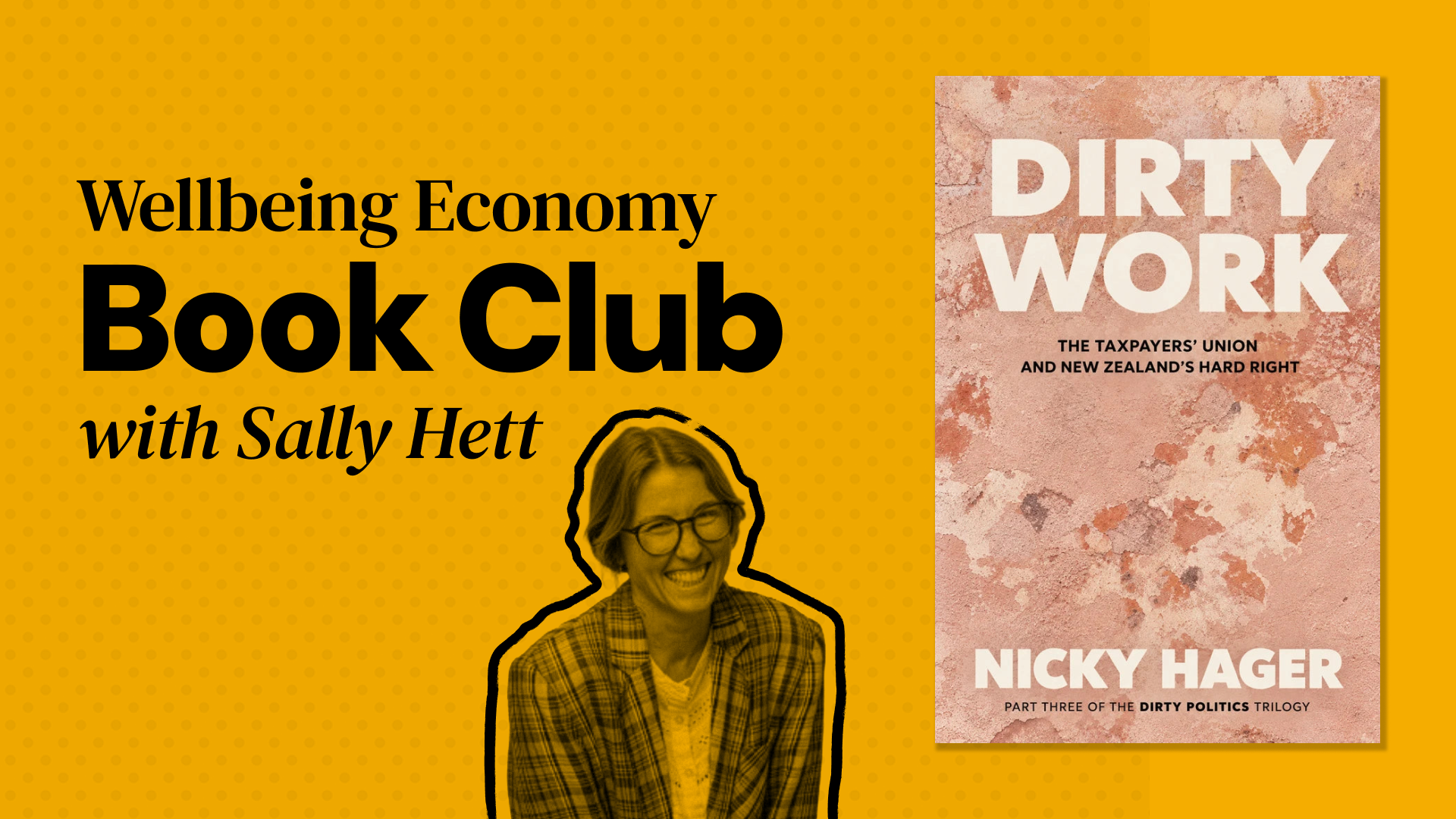
We host online and in-person events to share knowledge, foster connections, encourage collaboration. Come along to one of our upcoming events by RSVPing below.
-

We publish research and amplify new economic narratives
We create new knowledge about economic systems, demonstrate a wellbeing economy in practice, and support decision makers to implement wellbeing strategies. We amplify mahi that advances wellbeing economies and share our own inspiring vision, redefining the boundaries of what the economy can be.
-

We connect changemakers
With an engaged network of over 2000 people, we connect MPs, councillors, experts, business leaders, community organisations, researchers and passionate people. Including supporting a global policymakers network and convening local government networks.
-
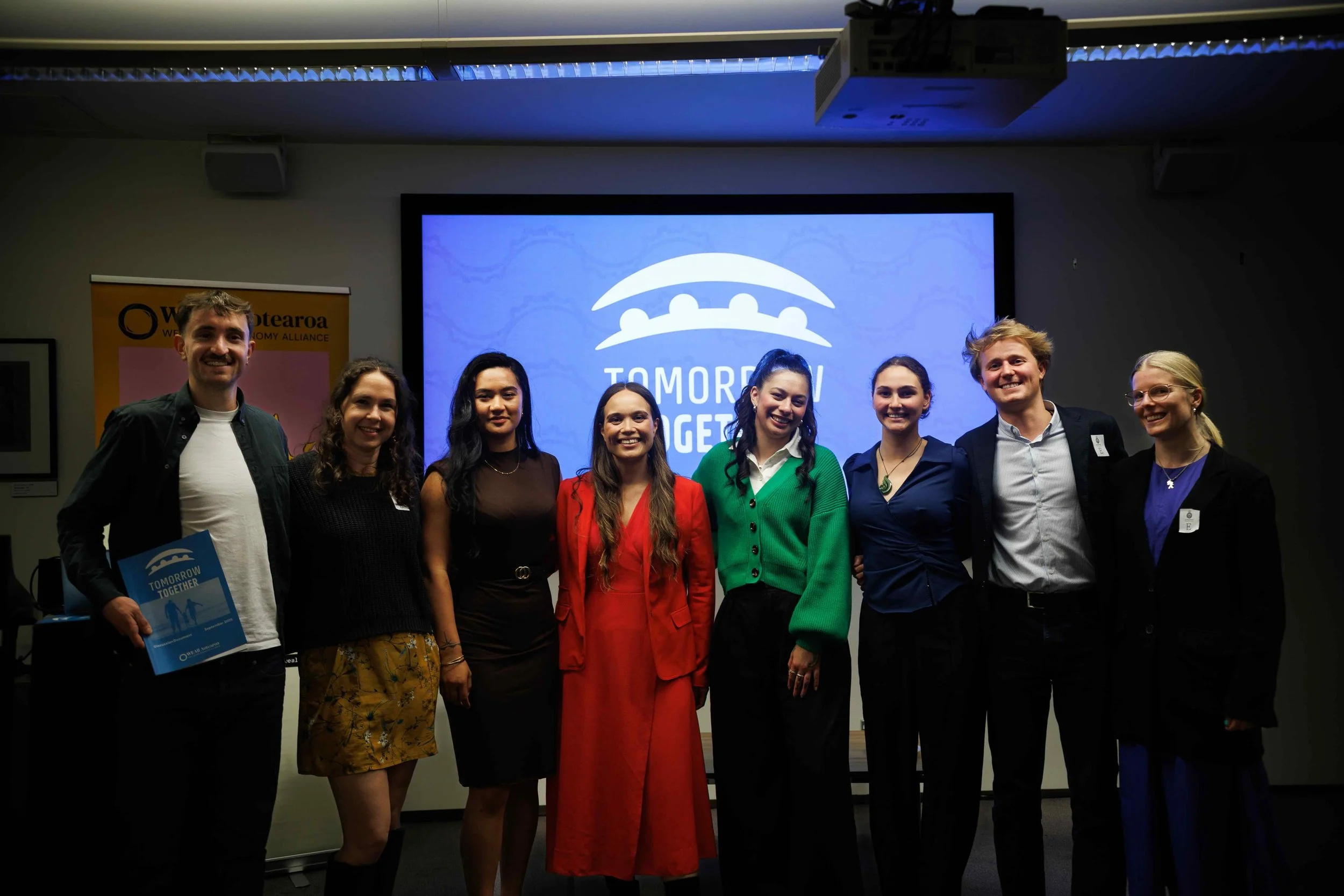
2025 was our biggest year yet
In 2025 we launched 3 major reports, ran 36 events, spoke at 22 conferences and events, delivered 11 workshops, wrote and presented 7 government submissions and shared our mission on 5 podcasts.
Upcoming events

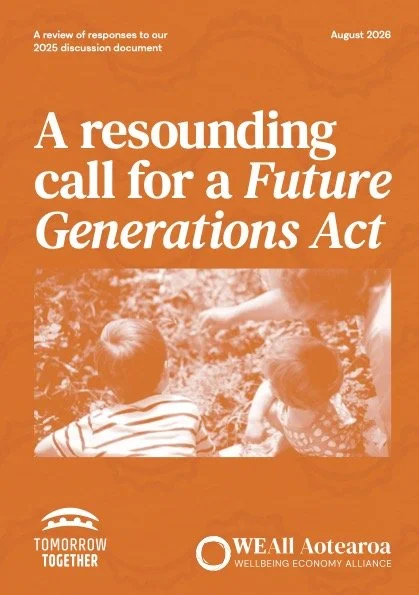
Our latest reports
Sign up to our newsletter
Our Partners